Yuexiu Park:
Five Rams and the Last Ming Wall
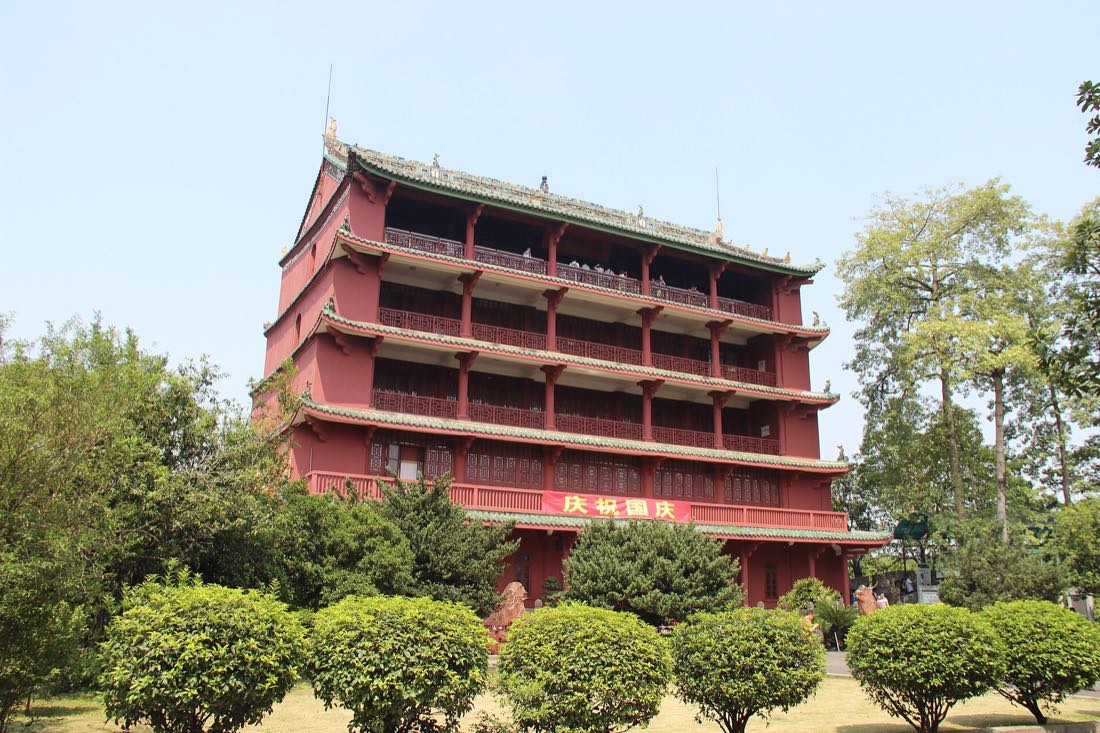
Yuexiu Park is free, open 06:00–22:00, and at 690,000m² the largest park in the city — but the reason to come is what it contains: the Five Rams Statue, the 11m granite emblem of Guangzhou (five immortals riding rams brought rice stalks to end a famine — the reason the city calls itself the Rice City); the only surviving stretch of Ming city wall, 1,137 metres with banyan roots prying the bricks apart; and Zhenhai Tower, the 1380s five-storey gate tower that now houses the Guangzhou Museum for ¥10 (~$1.40). Give it one to three hours, and note the Sun Yat-sen Memorial Hall is 100m from the south gate.
One hill, three essentials, no ticket queue
Enter at the Line 2 gate and climb: the Five Rams first (expect a queue of people photographing each other — it is the city's family-album shot), then along the ridgeline to the Ming wall, which is the sleeper. Built in the 1380s, it survives nowhere else in Guangzhou, and the stretch here runs through proper forest with strangler figs holding the ramparts together.
Finish at Zhenhai Tower on the crest — the red five-storey tower on every old export painting of Canton. The ¥10 Guangzhou Museum inside is a compact, chronological run through 2,200 years of the city, and the top-floor balcony gives you the old axis: tower, Sun Yat-sen Memorial Hall, Beijing Road, river. This is where you understand that Guangzhou has two ceremonial axes, and this is the old one.
From April to September Guangzhou runs 32–33°C at 75–79% humidity with 200–365mm of rain a month. One resident's description is the accurate one: it is like chewing the air. Front-load anything outdoors before 10:00, keep an indoor fallback, and treat a 7–12km sightseeing day as genuinely harder than the same distance anywhere temperate.
Yuexiu Park, practically
Questions people actually search
What is the Five Rams statue?
Guangzhou's founding legend in 11 metres of granite: five immortals rode rams into a starving settlement carrying rice stalks, and the famine ended. Carved in 1960, it became the city emblem almost immediately — it is Guangzhou's equivalent of Singapore's Merlion, with three thousand more years of story behind it.
How much does Yuexiu Park cost?
Nothing — the park is free and open 06:00–22:00. The only ticket inside is Zhenhai Tower, ¥10 for the Guangzhou Museum it houses, which is one of the best ten-yuan purchases in the city alongside the Nanyue King tomb and Chen Clan Hall.
Is the Ming city wall worth seeing?
Yes, precisely because there is so little of it: 1,137 metres survive, all of it in this park, most of it shaded and quiet. Guangzhou demolished its walls early and completely — this fragment, with banyans growing out of the ramparts, is the only place in the city you can touch the Ming.
What time should I go to Yuexiu Park?
Before 09:00, when the park belongs to tai chi groups, ballroom dancers and badminton games, and the temperature is still civil. April to September, an afternoon visit is genuinely hard work — the hill is real and the humidity is Guangzhou's.