Is White Swan Dim Sum Worth ¥400? The Honest Verdict (2026)
玉堂春暖 (Jade River) at the White Swan is a real restaurant — one Michelin star, and the only three-diamond Black Pearl listing in Guangzhou. It is also charging roughly five times what an excellent neighbourhood tea house charges for the same four items: har gow at ¥70 against ¥20–35, siu mai at ¥60 against ¥15–25. The set menu runs about ¥238 and à la carte lands nearer ¥400 a head. The food is good. The premium is for the address. If you want a special meal in Guangzhou, Bing Sheng gives you more cooking for less money. If you want morning tea, walk fifteen minutes and pay ¥60.
The most argued-about restaurant bill in Guangdong
This is not a case of a snobby internet piling on an expensive room. The complaint is specific, it is quantified, and the people making it are mostly Cantonese.
The reference thread ran to sixty-four comments and topped +120. The tone is set early — “$50 for dim sum in China is insane” — and the substance follows: “I will pay appropriate prices for Michelin quality etc but these prices are a rip off in Gz. You can get great dim sum for a fraction of this price.” A commenter who identified as Cantonese, with parents in the restaurant trade, was blunter: they had tried it, and found it basic, worse than other dim sum they had eaten, and more expensive.
The fairest summary in the whole thread, and the one that sat at +7, was this: “Both things can be true here. The price is a scam but it is true that they charge this at multiple places.” That is exactly right. Shamian and Beijing Road tourist restaurants run ¥200–450 a head for dim sum that costs ¥80–150 at a good local house. White Swan is the most visible example, not a lone offender.
An operator who turned up to defend the pricing was downvoted twenty-six times. Draw your own conclusion about how settled the local view is.
What morning tea actually costs in Guangzhou
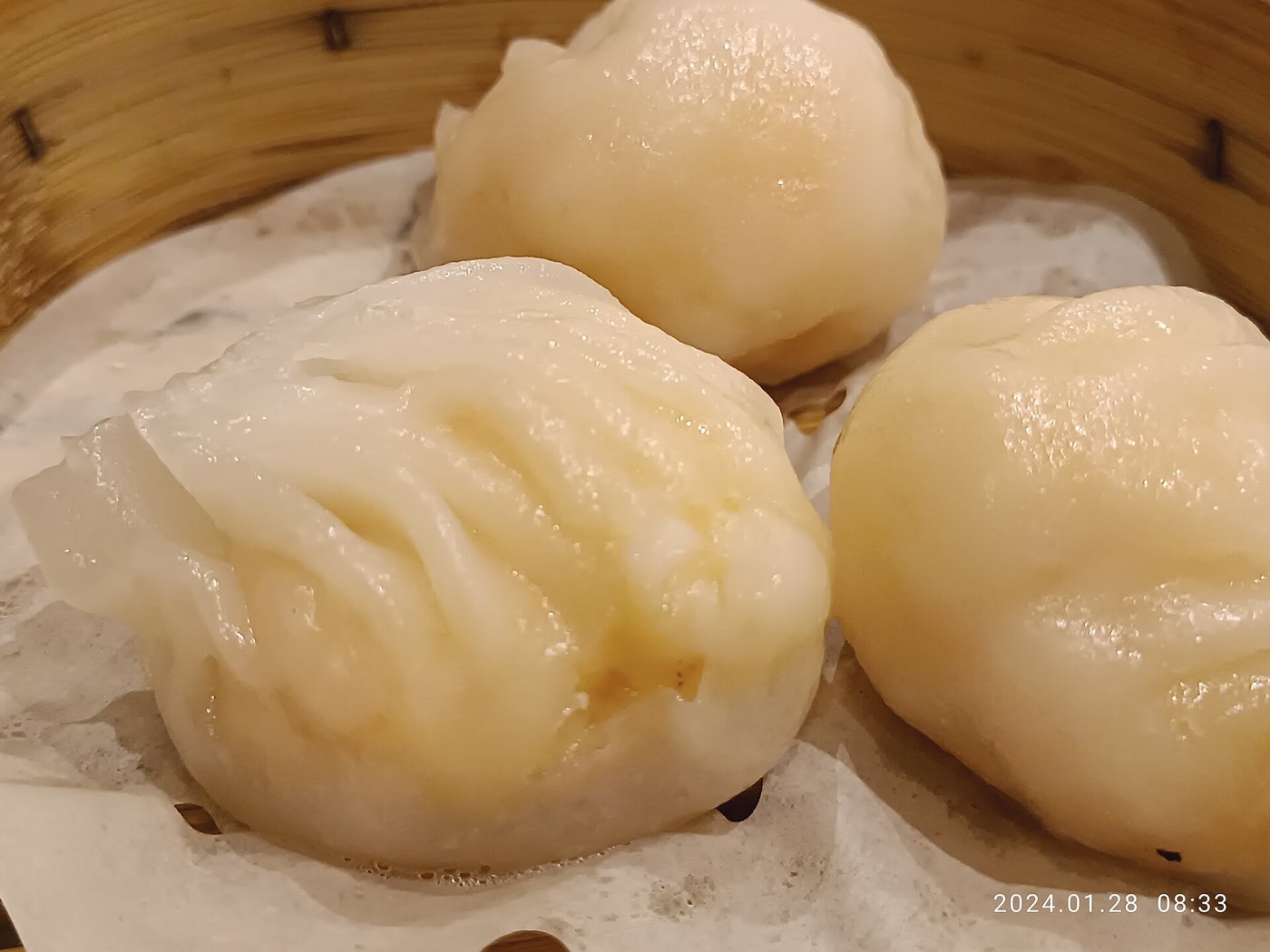
Har gow is the benchmark dish — thirteen pleats by tradition, translucent without tearing, whole shrimp with snap. Here is what the same order costs across the range, so you can see exactly what the view is priced at.
| Where | Per person | What you are paying for | Verdict |
|---|---|---|---|
| Neighbourhood 茶楼 | ¥30–60 | The real thing, on a weekday morning, with retirees and a newspaper. No English, tick-sheet ordering or a QR menu. | WORTH IT |
| Guangzhou Restaurant 广州酒家 | ¥80–120 | Founded 1935. The safe pick — less atmospheric than Panxi, more reliable than Lianxianglou. Signature 文昌鸡. | WORTH IT |
| Taotaoju 陶陶居 (1880) | ¥100–180 | Carved wood, calligraphy, a queue ticket and a single-day record of 2,886 orders. A polished high-volume chain now, but the historic branch earns it. | WORTH IT |
| Panxi 泮溪 (1947) | ¥80–150 | China's largest garden restaurant — 12,000m² of pavilions and koi ponds. You are buying the setting; go at 07:30 and have it nearly to yourself. | DEPENDS |
| White Swan 玉堂春暖 | ¥238 set · ~¥400 à la carte | One Michelin star, three Black Pearl diamonds, a colonial island and a river view. Har gow ¥70, siu mai ¥60. | SKIP |
Prices from the operators and from the 2025 Michelin and 2026 Black Pearl listings, checked August 2026. Tea seat charges of ¥3–20 per person and a 5–10% service charge are normal everywhere and are not a scam; holiday surcharges of 10–20% are also standard.
White Swan, practically
Morning tea with someone who can order
The real barrier to good cheap dim sum in Guangzhou is not money, it is the ordering system — a paper tick-sheet at the old houses, a Chinese-only WeChat mini-program at the chains. One guided morning fixes that permanently, and costs less than the White Swan bill.
Questions people actually search
Is White Swan Hotel dim sum worth it?
For most people, no. It is a genuine one-star kitchen, but you are paying roughly five times the price of an excellent neighbourhood tea house for the same core items — ¥70 har gow against ¥20–35. Go if you specifically want the colonial-island setting and the river view and have decided that is worth about ¥300 a head. Otherwise Taotaoju or Guangzhou Restaurant give you more for less.
Where is the best cheap dim sum in Guangzhou?
A neighbourhood 茶楼 on a weekday morning, at ¥30–60 a head. If you want a name you can find: Dian Du De (点都德) is the most foreigner-friendly of the serious houses — picture menus, mini-program ordering, and locals genuinely eat there — at ¥100–180. For the ¥15–40 street layer, Wenming Road in Yuexiu is the single best concentration in the city.
What time should I go for morning tea in Guangzhou?
Be seated by 08:00 on a weekday. Peak and best is 07:00–11:00; weekend 08:00–09:30 is the most atmospheric but queues at the famous branches run 45–90 minutes. Old-school houses open at 06:00–07:00. There is also 夜茶, night tea, from about 17:30 — a real Guangzhou thing, but the variety drops 30–50%.
Do trolley carts still exist in Guangzhou dim sum?
Largely no. The trolley service you may have seen in Hong Kong films is essentially extinct in Guangzhou, surviving only as an occasional weekend heritage revival. Ordering is now either the classic paper tick-sheet (点心纸) at the old houses, or a QR-code mini-program at the chains — which is the single biggest friction point for foreign visitors.
What should I order at a Guangzhou tea house?
Start with the four heavenly kings: har gow (虾饺), siu mai (烧卖), char siu bao (叉烧包) and egg tart. Then add the two Guangzhou signatures most visitors miss — 红米肠, the red-rice noodle roll, and 炸两, a fried dough stick wrapped in rice noodle, which is the best texture play in Cantonese breakfast. Phoenix claws and steamed spare ribs are the local order you will see on every other table.