Chen Clan Ancestral Hall: Is It Worth ¥10? (2026)
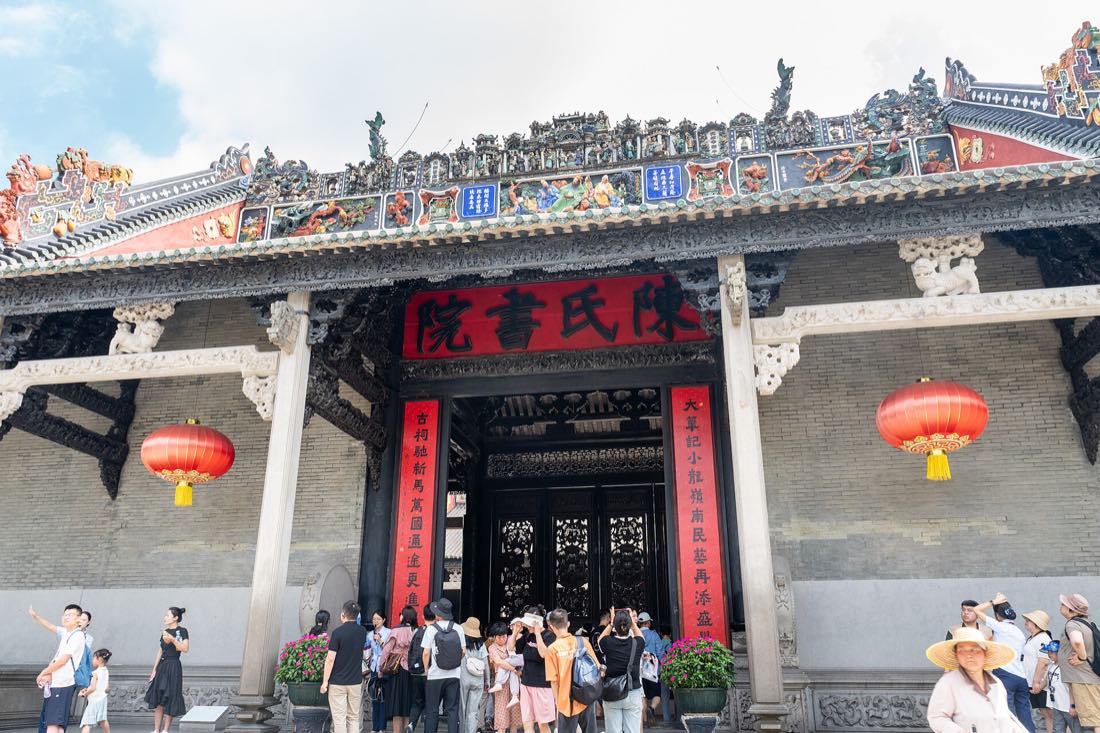
Forty-eight branches of the Chen surname across seventy-two Guangdong counties pooled money in 1888 to build a combined ancestral temple and exam academy, and then spent five years covering every available surface in carving. The result is 15,000m² of the densest decorative craft in southern China, and it costs ¥10.
Chen Clan Ancestral Hall is where you go to understand what Lingnan builders could actually do. ¥10 (about $1.40) buys nineteen buildings around six courtyards, 1,100 individual scenes carved into the brick alone, and roof ridges loaded with Shiwan ceramic figures that read like a frozen opera. It is one minute from Exit D of its own metro station, which makes it the easiest major sight in Guangzhou to reach. The catch is simple and it is not small: it closes on Mondays, along with almost every other museum in the city.
Forty-eight families, five years, and every surface used
This is not a temple in the religious sense. It is a clan corporation's headquarters — part ancestral hall, part boarding academy for Chen boys sitting the imperial exams — funded by subscription from Chen branches across seventy-two counties of Guangdong.
Built between 1888 and 1893, it covers 15,000m²: nineteen buildings, six courtyards, nine halls, arranged on a strict three-by-three grid with connecting corridors. The plan is conventional. The decoration is not — the subscription model meant the budget kept arriving, and the clans competed to out-commission each other.
What craft historians call the Seven Wonders of Lingnan decoration are all present in one compound: wood carving, brick carving, stone carving, ceramic sculpture, plaster relief, iron casting and painting. The brick carving alone runs to around 1,100 separate scenes, and the six large panels on the eastern and western outer walls are the ones craft people travel for — cut from soft grey brick after firing, in relief deep enough to hold shadow.
The centrepiece is Juxian Hall, the assembly hall at the heart of the compound, 14.5m across with carved screen doors running its full width. Look up before you look around: the roof ridges carry Shiwan ceramic figure groups, glazed and crowded, each ridge telling a scene from Cantonese opera or classical legend. They were made in Foshan, which is a 40-minute metro ride away and where you can still watch the kilns work.
It has been the Guangdong Folk Art Museum since 1959, so the halls also hold ivory-ball carving, jade, embroidery and Shiwan pottery. The collection is good. It is also, honestly, secondary — the building is the exhibit.
It closes on Mondays, and that breaks the standard route
Every English-language Guangzhou itinerary, including the ones ranking above this page, runs old city then new city with Chen Clan as the first stop. On a Monday that route collapses at 09:00.
Chen Clan Ancestral Hall is closed Mondays. So is the Nanyue King Museum, the Guangdong Museum, Bai'etan Art Centre, the Cantonese Opera Art Museum inside Yongqingfang and the Guangdong Science Center. That is most of the city's indoor culture, shut on the same day.
If your one full day is a Monday — and on a layover you do not get to choose — build it around things that do not close: Baiyun Mountain from 06:00, Shamian Island, the Enning Road arcades, and a Pearl River cruise after dark. Nobody else tells you this, and it is the single most useful sentence on the page.
Opening is 09:00–17:00 with last entry at 16:30. The compound is more atmospheric in the first hour, before the tour groups reach it from the coach drop, and the light on the western brick panels is better late afternoon.
Is Chen Clan Ancestral Hall for you?
Chen Clan Ancestral Hall, practically
Entry tickets and the guided version
At ¥10 there is no money to save here. What a guide buys you is the ability to read the carvings — the panels are dense with opera scenes and classical references that carry no English labelling at all, and unguided most visitors photograph them without knowing what they are looking at.
Chen Clan Ancestral Hall questions
How much does Chen Clan Ancestral Hall cost?
¥10, roughly $1.40, with concessions for students and seniors. It is the same price as the Nanyue King Museum, and between them those two tickets are the strongest ¥20 you can spend in Guangzhou.
Is it open on Mondays?
No, it is closed all day Monday. So are the Nanyue King Museum, the Guangdong Museum, Bai'etan Art Centre, the Cantonese Opera Art Museum and the Guangdong Science Center — a Monday in Guangzhou needs a completely different plan built around Baiyun Mountain, Shamian Island and the river.
How long should I spend there?
Ninety minutes to two hours. Under an hour and you will walk past the brick panels without registering them; over two and the folk-art galleries start to repeat. Last entry is 16:30 against a 17:00 close.
How do you get to Chen Clan Ancestral Hall?
Metro Line 1 or Line 8 to Chenjiaci station, Exit D or F, and the gate is about one minute's walk. It is the only major sight in Guangzhou with its own named metro station, which makes it the easiest thing in the city to slot into a tight schedule.
What are the Seven Wonders of Lingnan craft?
Wood carving, brick carving, stone carving, ceramic roof sculpture, plaster relief, iron casting and painting — all seven appear in this one compound. The brick carving is the standout, with around 1,100 individual scenes and six large exterior panels on the east and west walls.
Is it better than the Nanyue King Museum?
They answer different questions. Nanyue King is the better museum and explains why Guangzhou exists; Chen Clan is the better building and shows what the region's craftsmen could do. If you only have time for one and you like objects, take Nanyue; if you like architecture, take this.